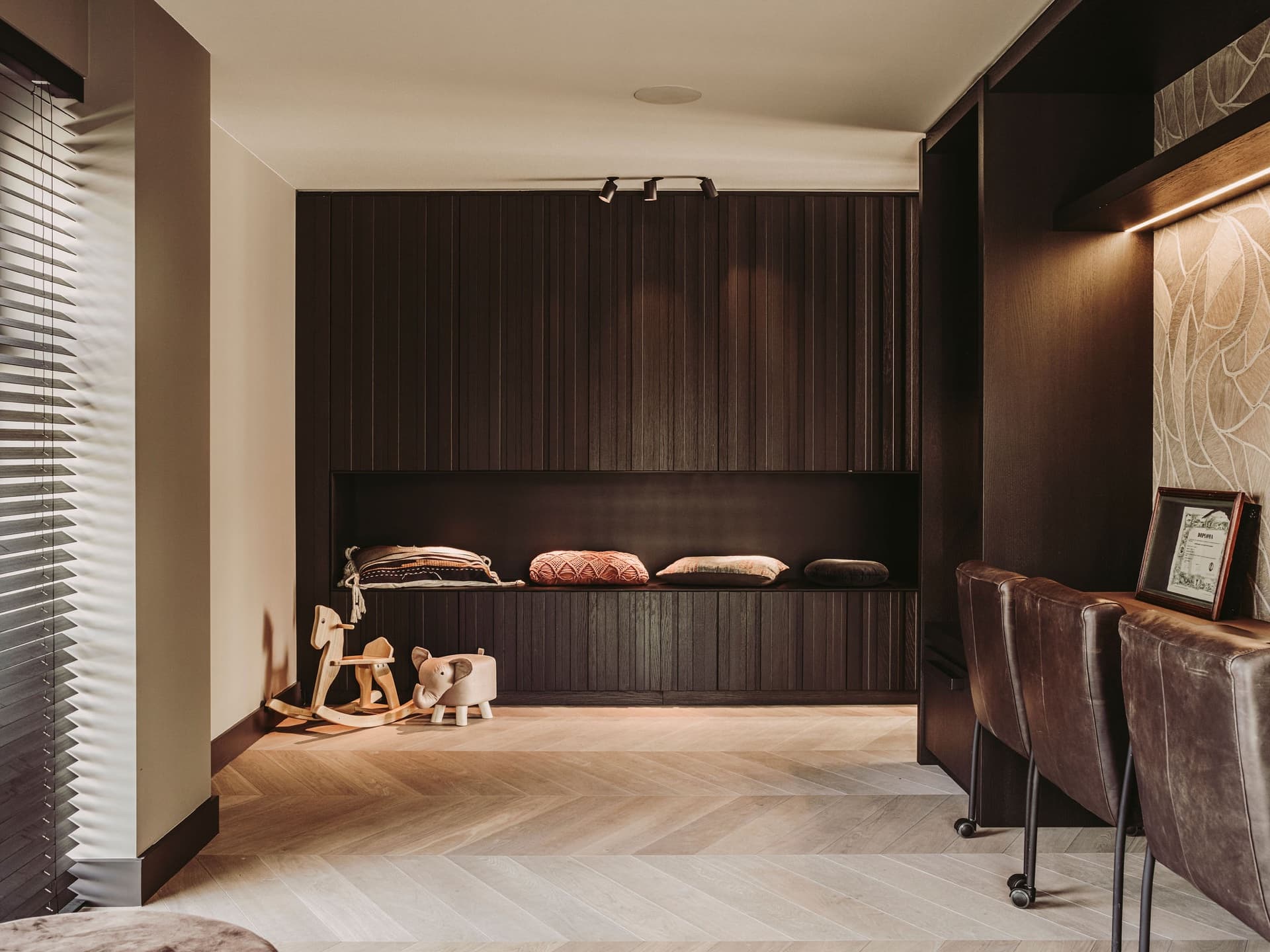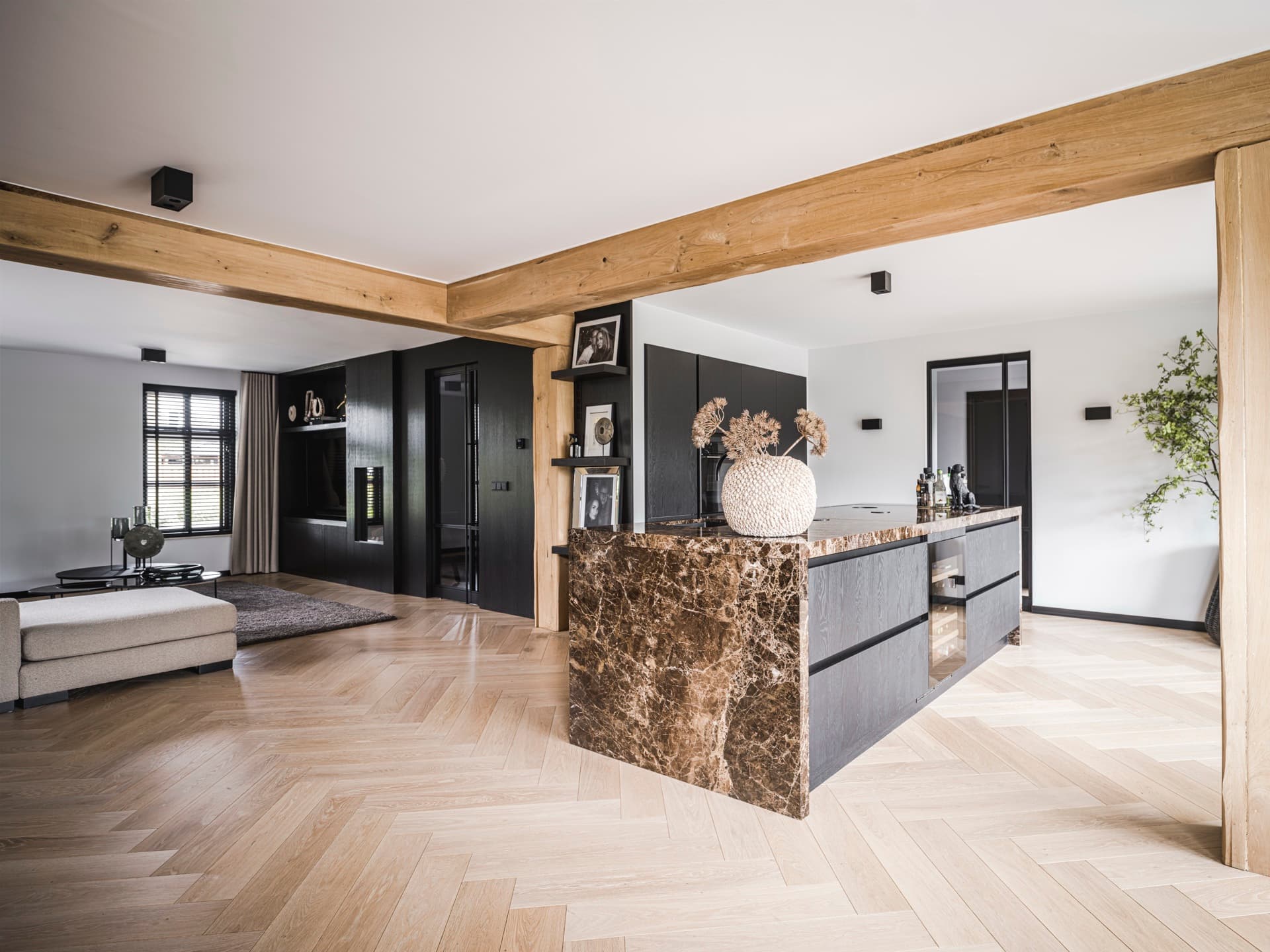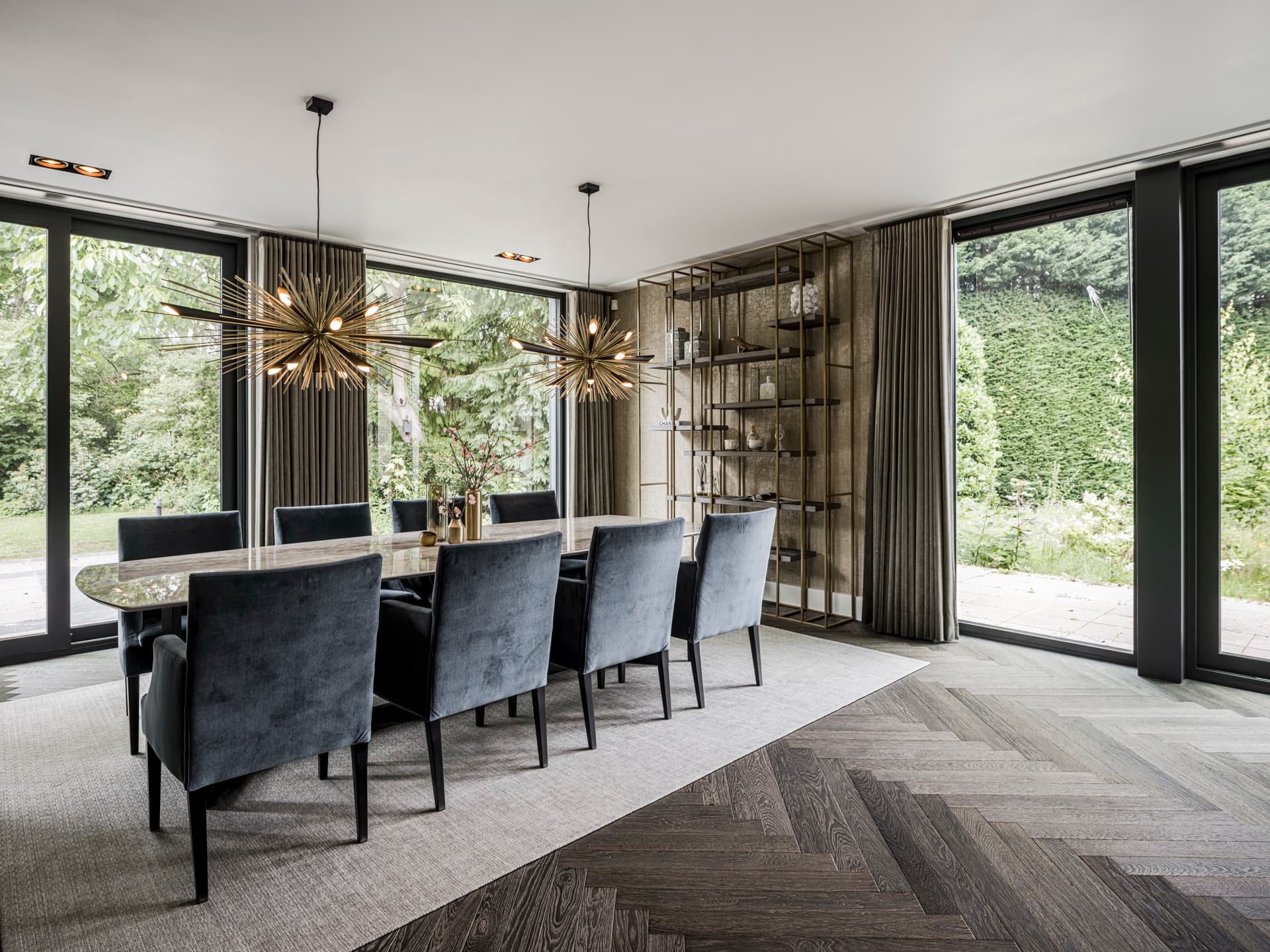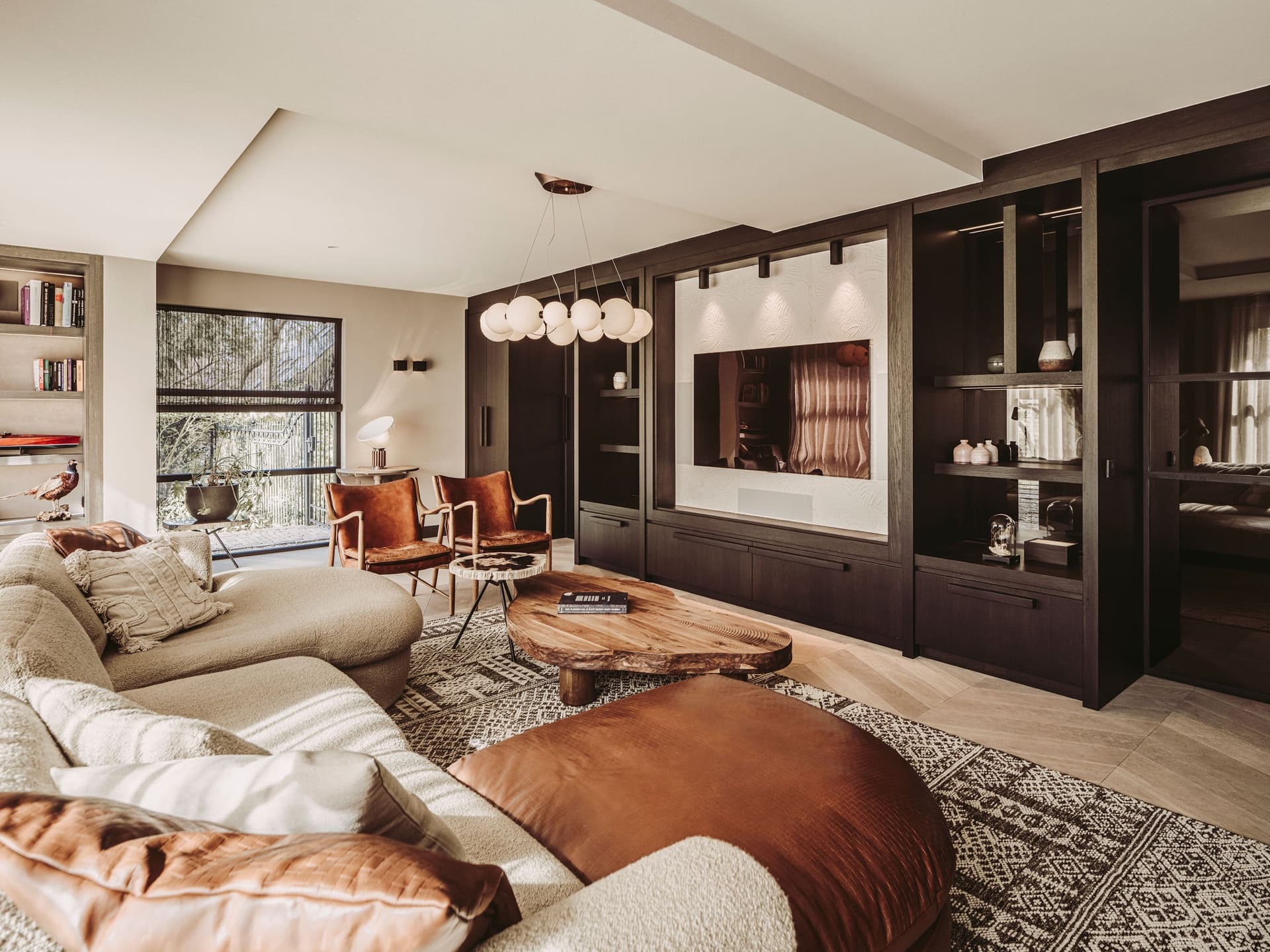

The chevron pattern — also known as Hungarian point — is the most elegant variant of the point pattern. The angled-cut planks form a perfect, continuous V-line. Available in 45° and 60° versions.
A chevron floor — also known as Hungarian point — features planks cut at an angle and pointed together. Unlike herringbone, where planks are cut straight, chevron creates a continuous V-line without interruptions. This gives a sleeker and more symmetrical appearance. The pattern owes its name to the French word for "rafter" and has been used in the most prestigious European interiors since the 17th century, from Versailles to Amsterdam canal houses. We offer chevron in two angles: 45 degrees for a more compact pattern and 60 degrees for a longer, more elegant effect.
Planks cut at an angle for a continuous V-line
Available in 45° and 60° versions
Sleeker and more symmetrical than herringbone
Origin in 17th-century European palaces
Ideal for spaces where you want a luxurious appearance
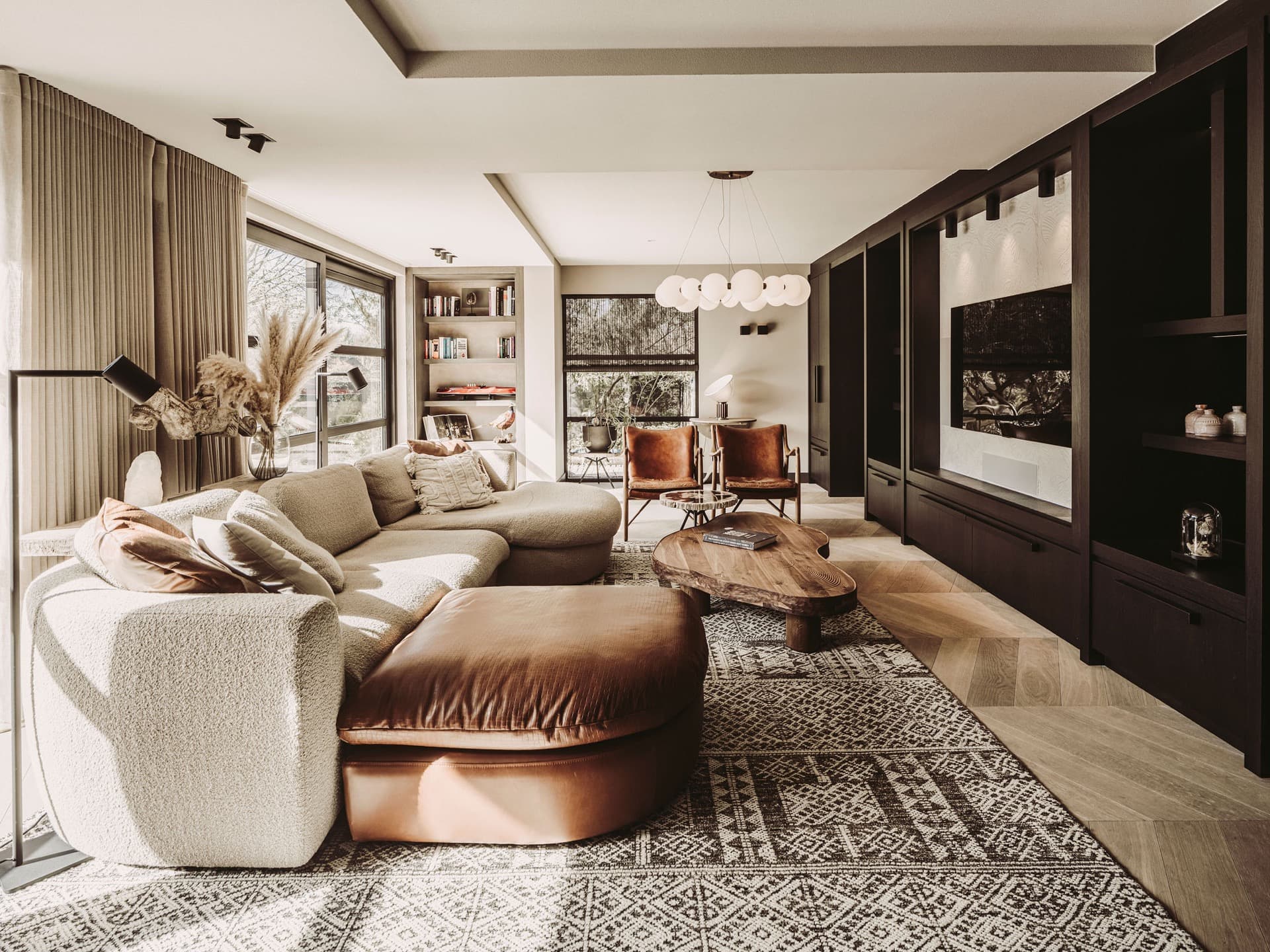
An inviting living space showcasing our Classic Flame boards. The warm, golden tones bring character and energy to this tastefully decorated home.
View Project →With 45° chevron, the planks are cut at a sharper angle, giving a more compact and wider V-pattern. With 60° chevron, the angle is less sharp, creating a longer and slimmer V-pattern. 60° is often considered more elegant and is popular in larger spaces.
Yes, chevron requires more precision during installation because the angled ends must align perfectly. An experienced floor installer is essential for a beautiful end result. We always recommend professional installation.
The name "Hungarian point" refers to the origin of this laying pattern in Central Europe. The pattern became popular in Hungarian and French palaces in the 17th and 18th centuries. In French, it is called "point de Hongrie". The pointed V-shape distinguishes it from the broken zigzag pattern of herringbone.
Request a free catalogue or contact us for personal flooring advice.