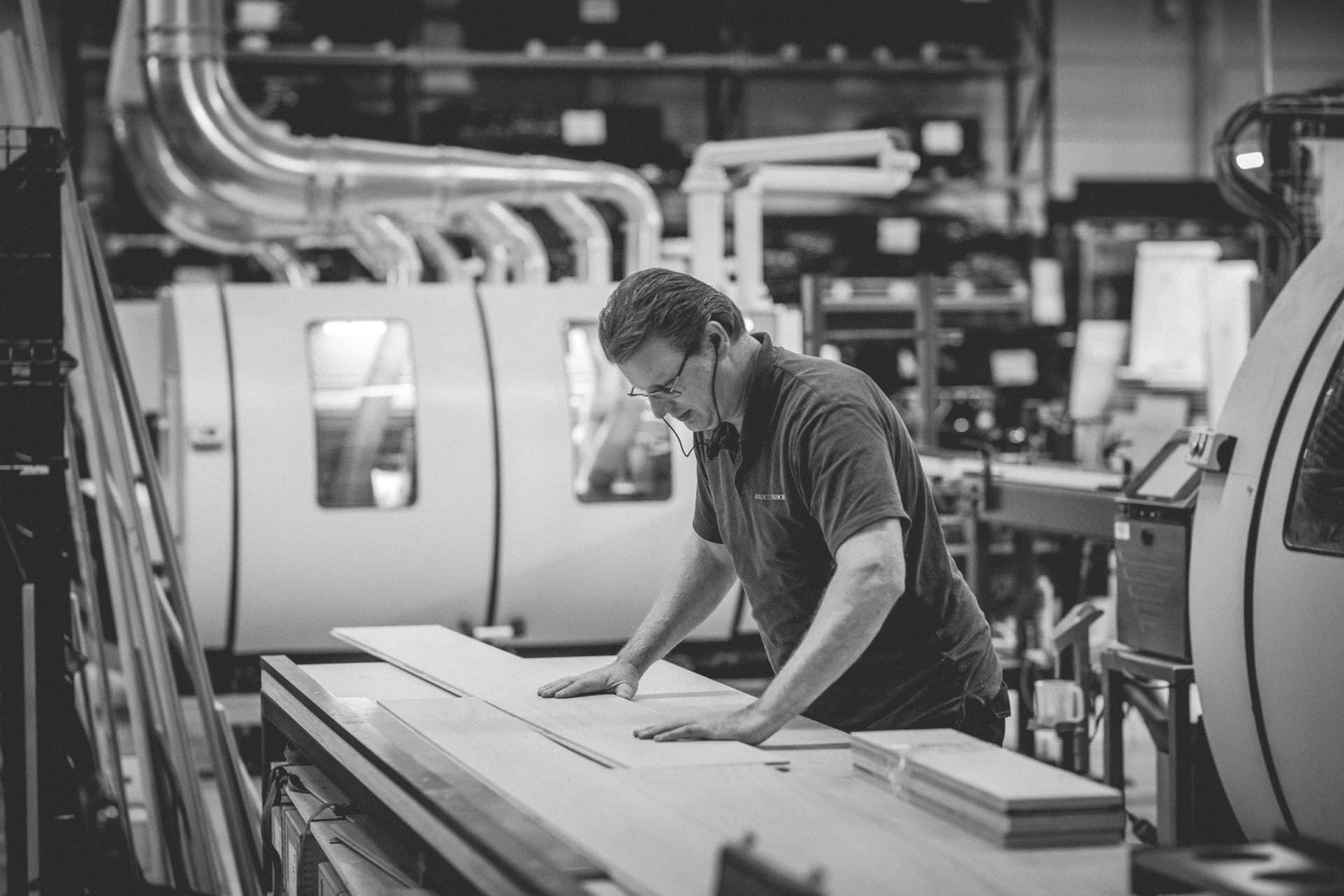
It's one of the most common questions we hear: should I choose solid or engineered oak flooring? The internet is full of contradictory advice, so let's cut through the noise with facts from our production facility in Oss, where we manufacture both types daily.
Solid oak flooring is milled from a single piece of European oak, typically 18-21mm thick. It's the traditional choice, and the concept is beautifully simple: one solid plank of hardwood, nothing else. This thickness allows for multiple sandings over its lifetime, which is why solid floors can last well over a century.
Engineered flooring uses a top layer of genuine European oak (4mm at Real Dutch Floor) bonded to a multi-layer plywood or HDF core. This cross-laminated construction is no shortcut — it's precision engineering. By layering wood in opposing grain directions, the plank resists expansion and contraction far better than solid wood alone.
This is the decisive factor for many homeowners. Solid wood naturally expands and contracts with changes in humidity and temperature. In modern homes with underfloor heating, this movement can cause gaps, cupping, or buckling. Engineered oak remains dimensionally stable even under changing conditions, making it the only safe choice for underfloor heating systems.
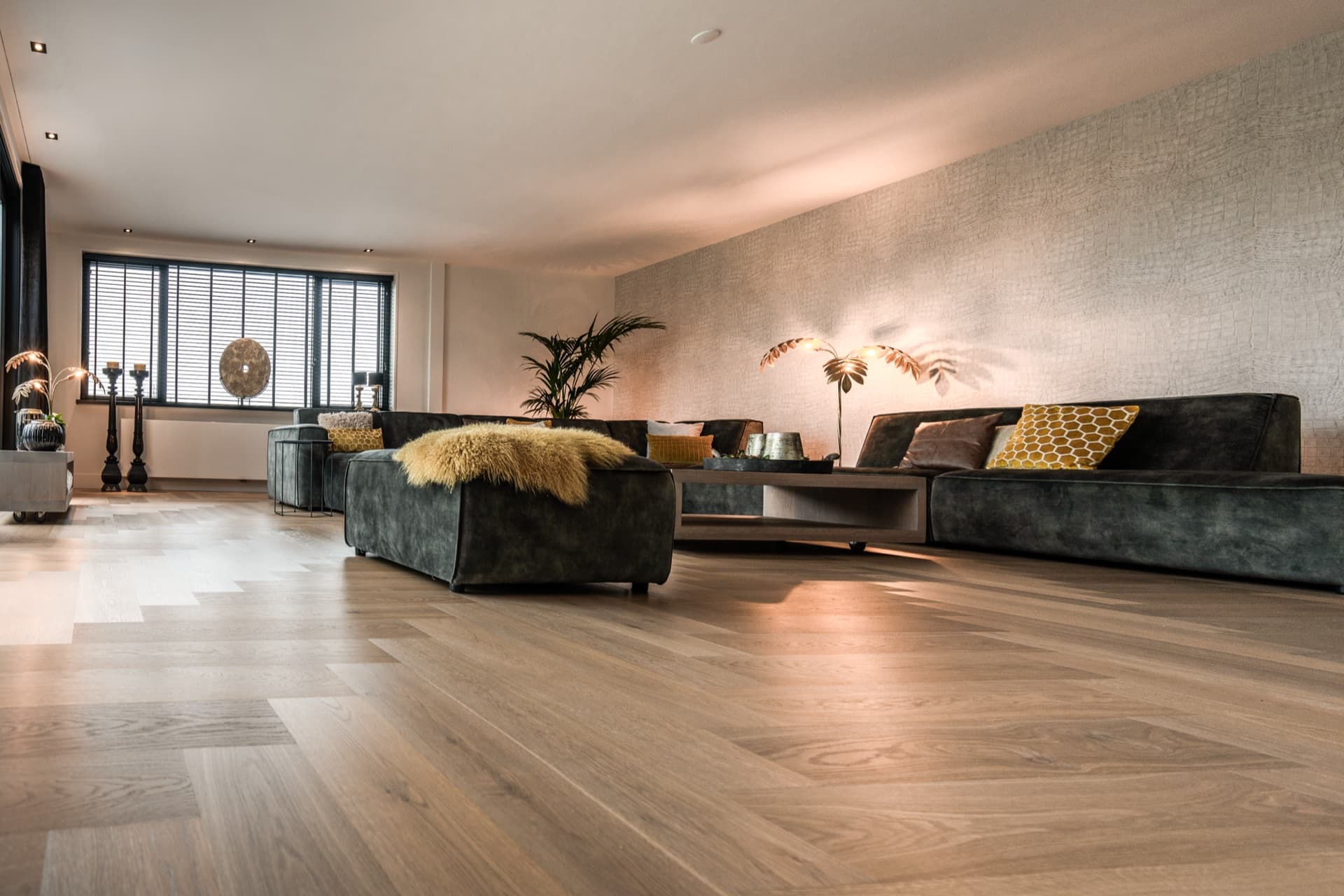
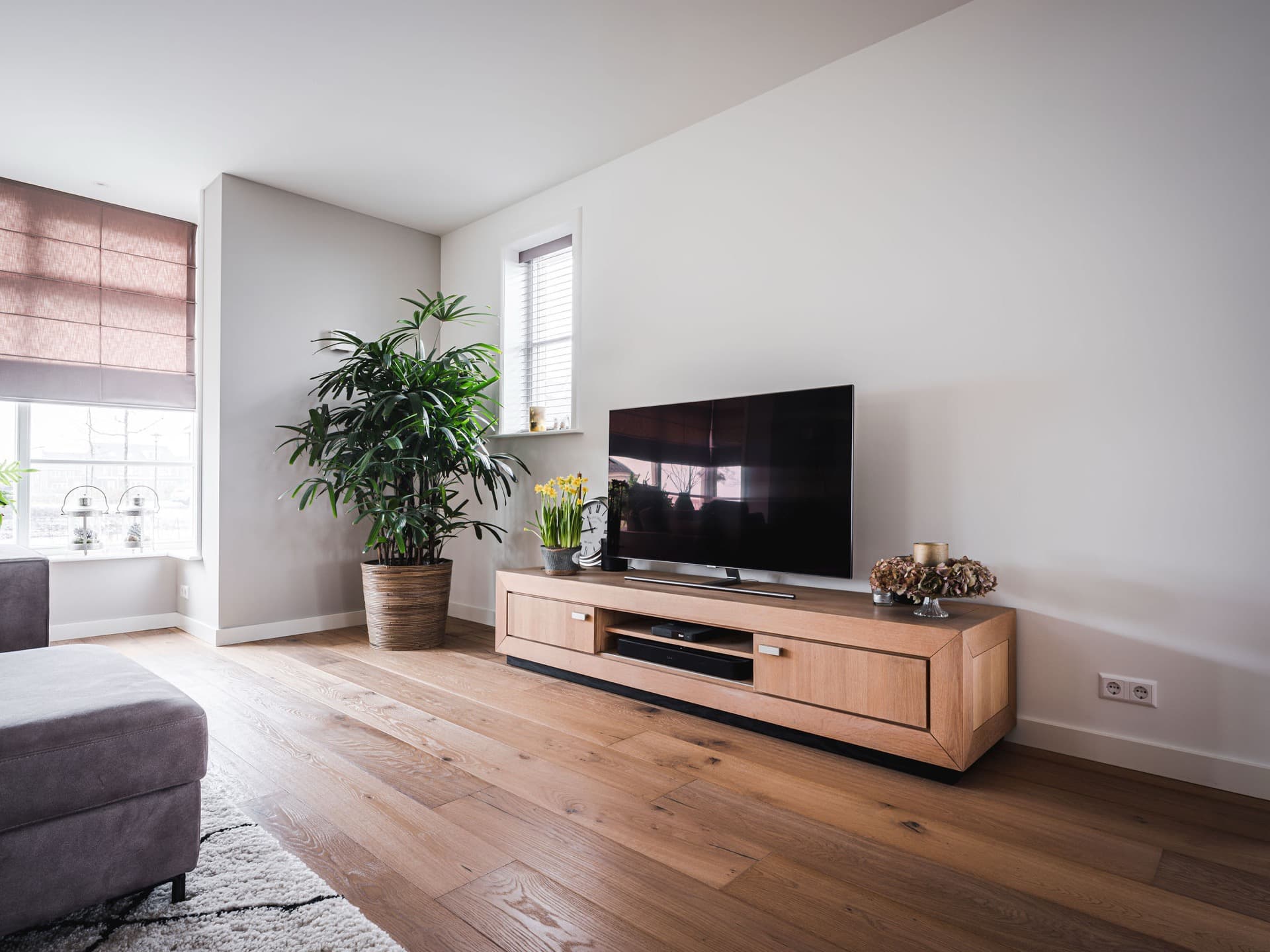
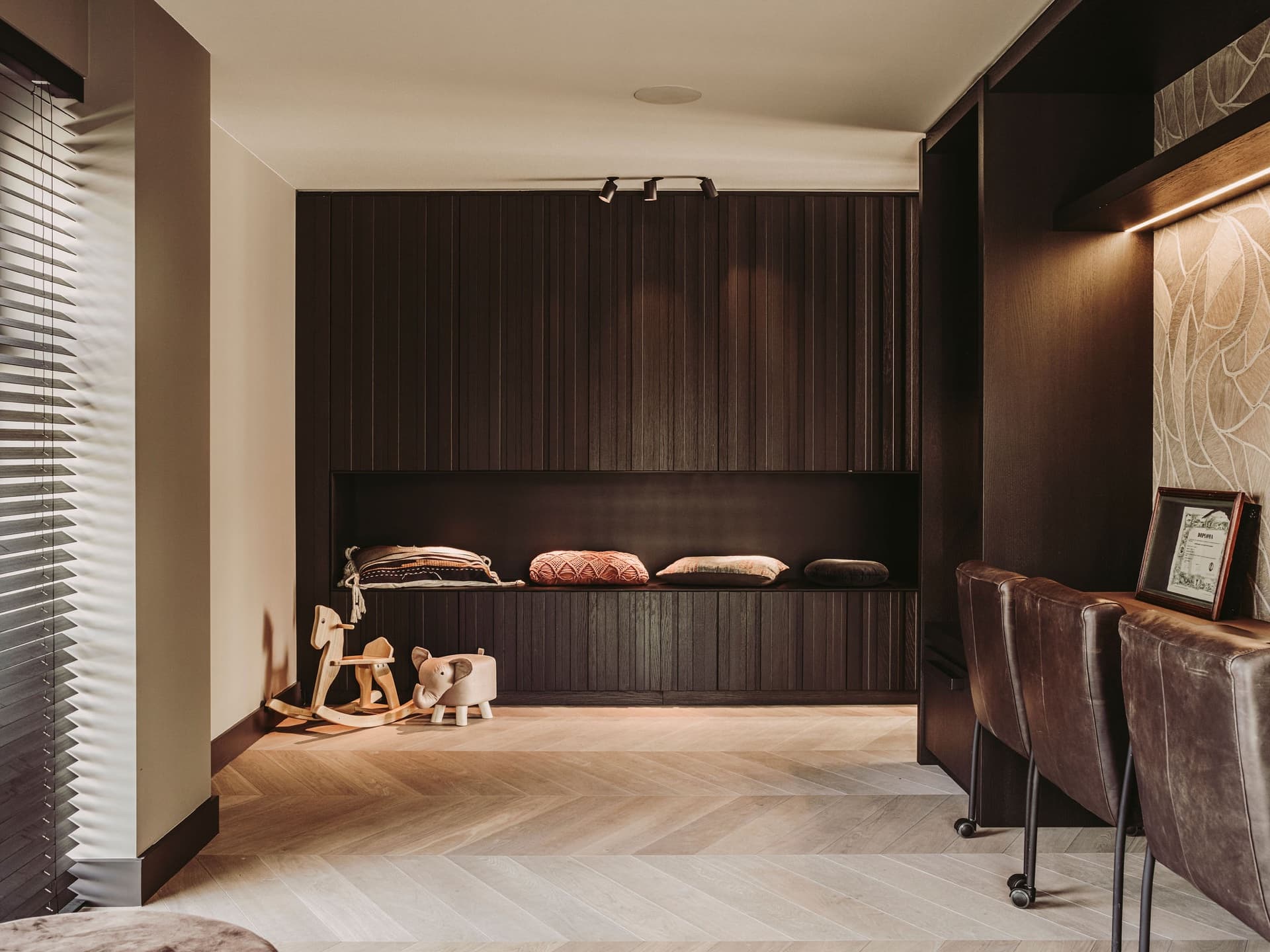
Here's what many people don't realize: the surface you walk on and look at is the same European oak in both cases. A well-made engineered plank with a 4mm oak top layer is visually and tactilely indistinguishable from solid oak. The same brushing, oiling, smoking, and finishing techniques apply to both.
An engineered plank uses significantly less oak per square meter than a solid plank. Our Eco collection at just 12.8mm total thickness proves that responsible material use and premium quality aren't mutually exclusive. With European oak forests under increasing pressure, using raw materials efficiently isn't just smart — it's necessary.
For most modern homes, engineered oak flooring is the better choice. It offers the same authentic look and feel as solid oak, with superior stability, compatibility with underfloor heating, and a more sustainable footprint. At Real Dutch Floor, all our collections use multi-layer construction — not because it's cheaper, but because it's better engineering.
The only scenario where solid might be preferred is in historic renovations where authenticity to the original construction method is paramount. For everything else, engineered oak delivers the beauty of solid wood with the performance of modern engineering.
Real Dutch Floor Editorial
Written by the flooring experts at Real Dutch Floor. With decades of experience in European oak parquet manufacturing, our team shares practical insights on choosing, installing, and maintaining wooden floors.