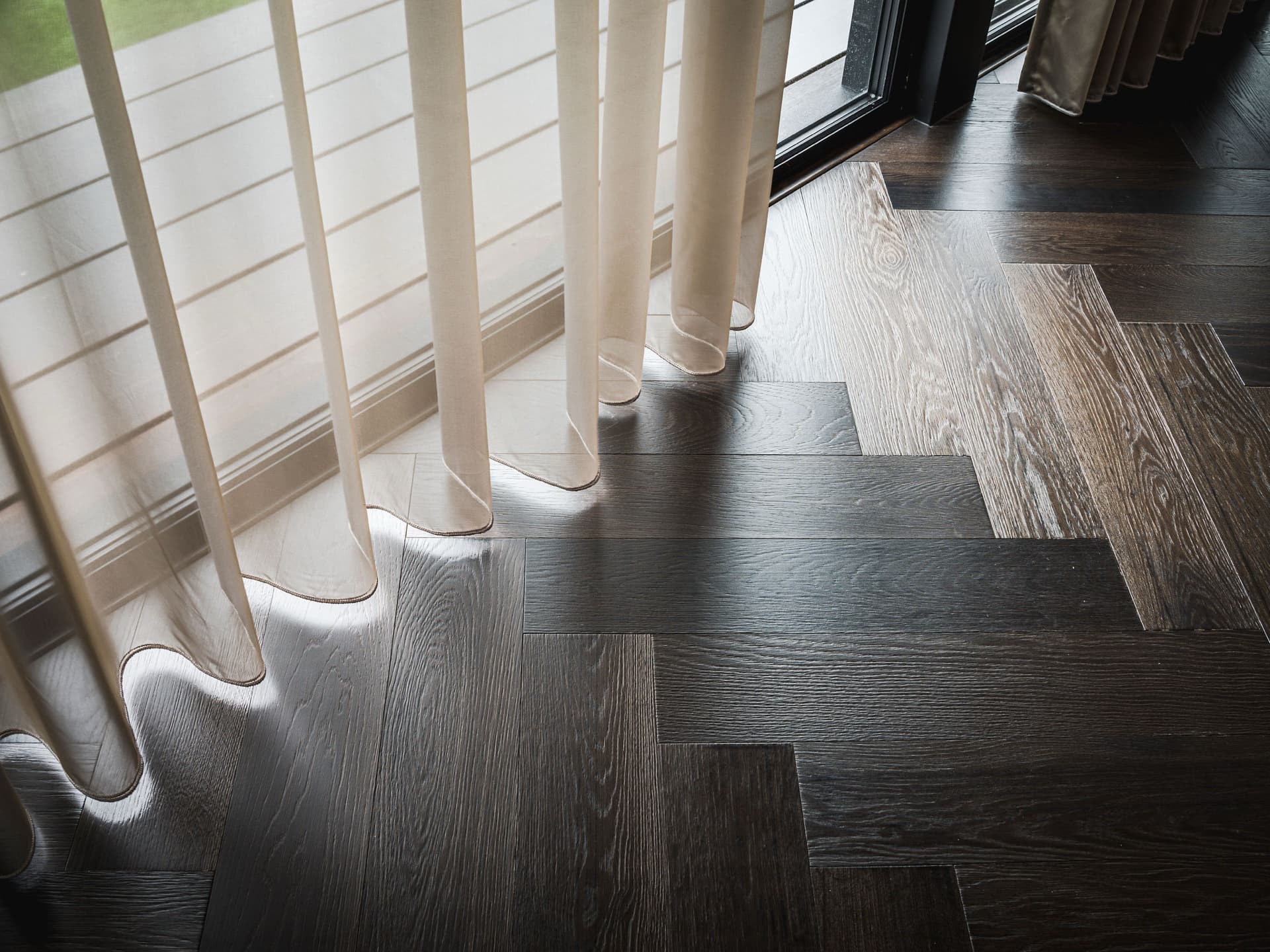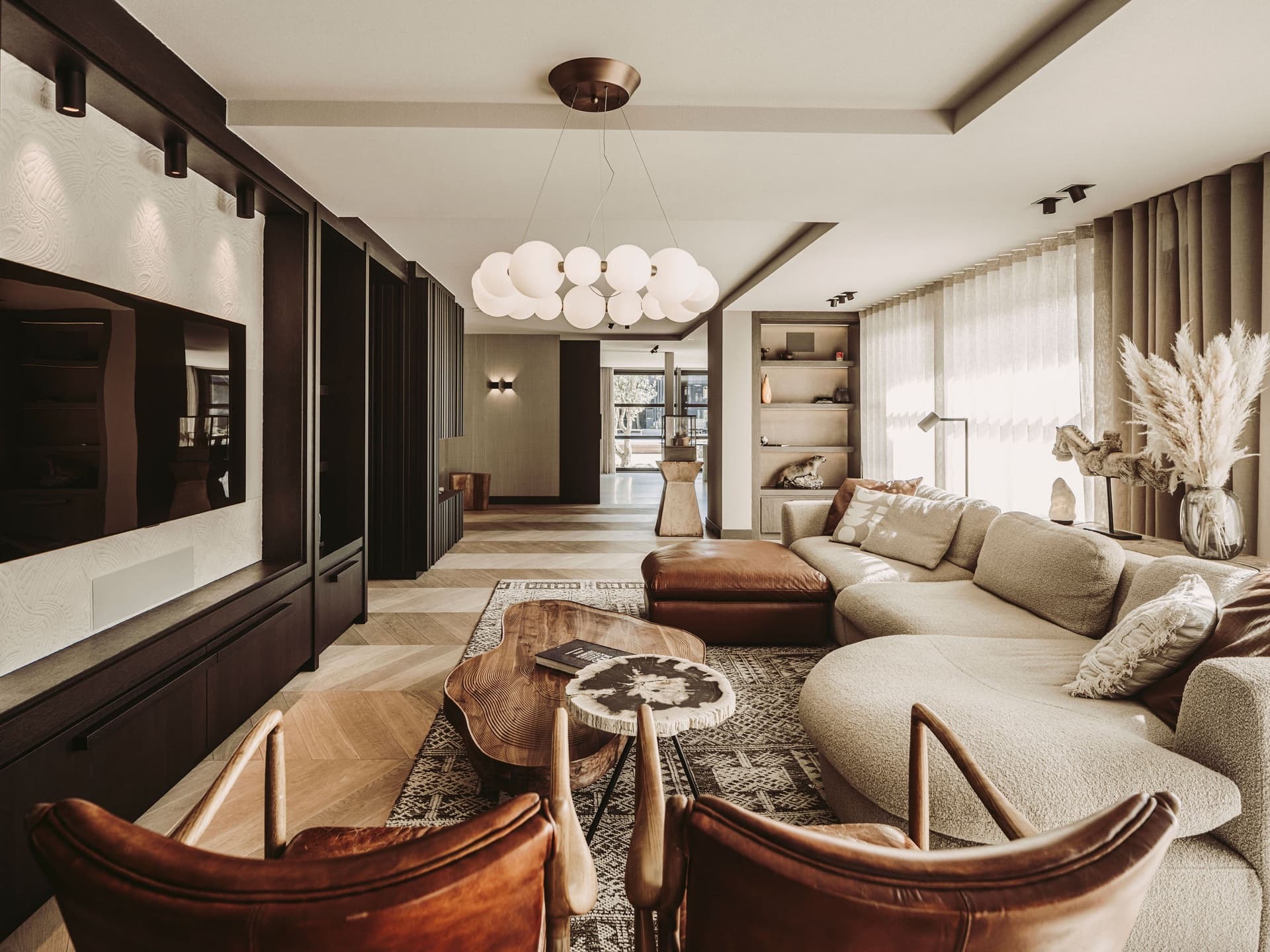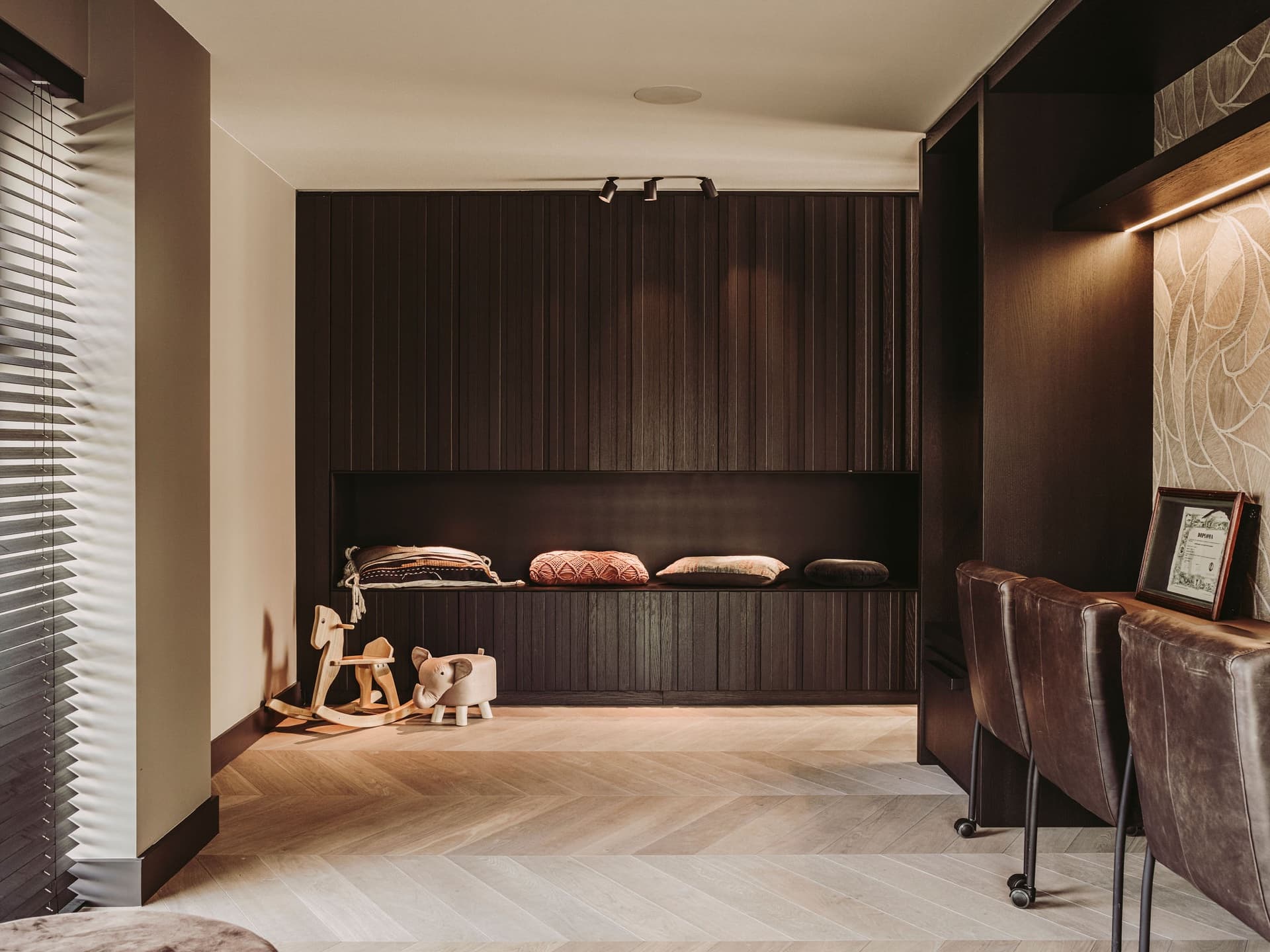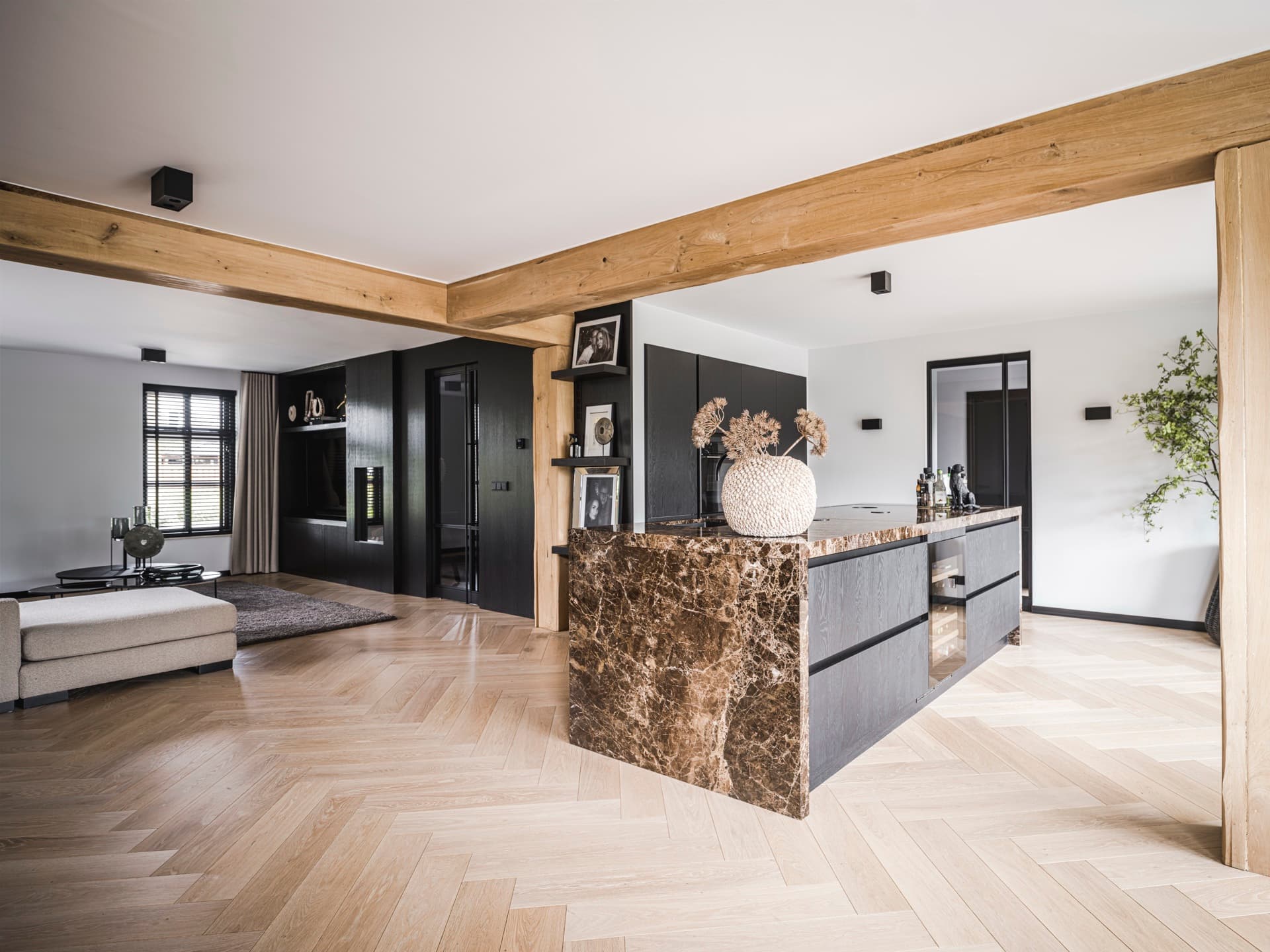
Patterned oak floors have been a hallmark of distinguished European interiors for centuries. Today, both herringbone and chevron are experiencing a powerful resurgence — but which one is right for your space? Let's break down the differences.
At first glance, herringbone and chevron look similar. Both create a V-shaped zigzag pattern. The key difference is in the ends of the planks:
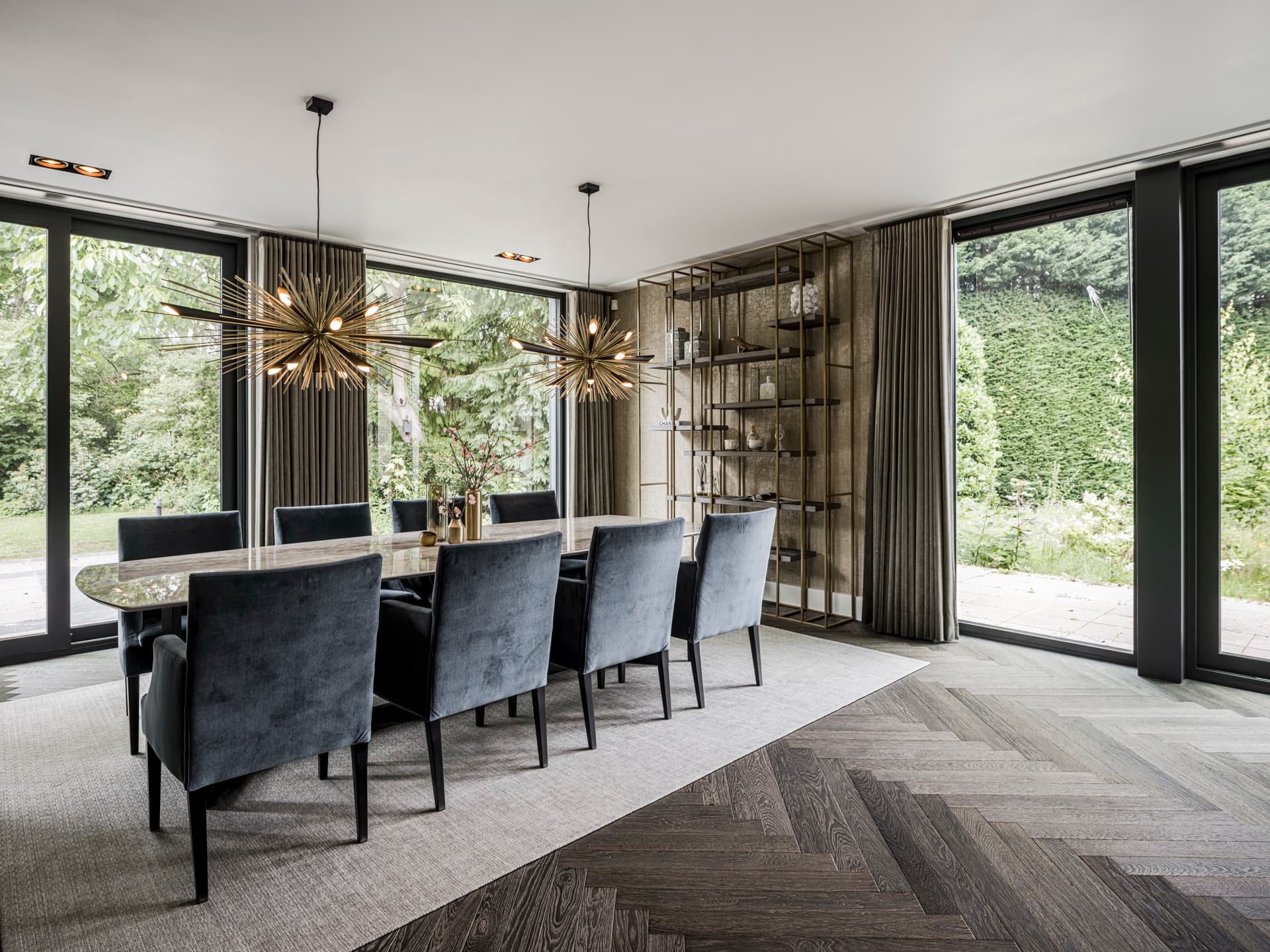
Herringbone: Each plank is cut at 90° (rectangular) and placed perpendicular to the next, creating a broken zigzag where the end of one plank meets the side of the next.
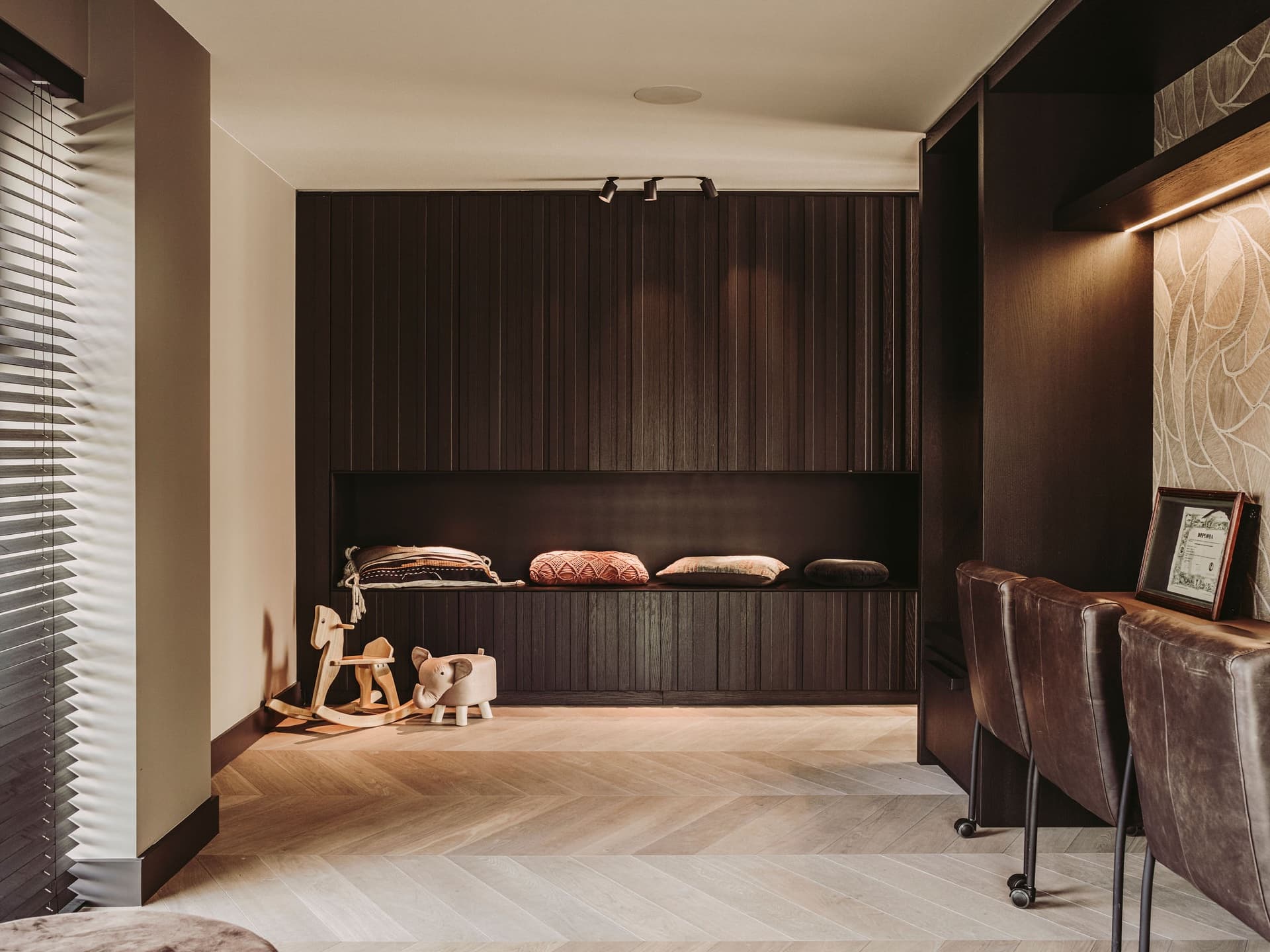
Chevron: Each plank is cut at an angle (typically 45° or 60°) so the ends meet in a clean, continuous V-line. This creates a sharper, more streamlined zigzag pattern.
Herringbone has been used in European floors since the 1500s. The pattern creates a sense of movement and energy — the staggered joints draw the eye in multiple directions. It works equally well in a 17th-century canal house and a contemporary loft apartment.
Because the planks are rectangular, herringbone is more forgiving during installation. Slight imperfections are less noticeable, and the pattern offers a warmer, more organic feel. It's the more popular choice in The Netherlands and across Northern Europe.
Chevron creates a stronger sense of direction. The continuous V-lines pull the eye forward, making spaces feel longer and more elongated. This pattern has a distinctly French heritage — think Parisian apartments and grand ballrooms.
The angled cuts mean less waste but require more precision during installation. The clean lines give chevron a more formal, refined appearance that pairs beautifully with contemporary and classic-elegant interiors.
Both patterns can dramatically influence the perception of space. In narrow rooms, laying the pattern lengthwise creates an illusion of depth. In large, open-plan spaces, herringbone adds visual interest without overwhelming, while chevron provides structure and direction.
For smaller rooms, consider using narrower planks (70-90mm) to keep the pattern proportionate. In larger spaces, wider planks (up to 120mm) make a bold statement.
Our Classic, Design, and Royal collections are all available in herringbone and chevron variants. The Royal collection additionally offers the widest range of colors in pattern formats, making it particularly versatile for bespoke projects.
Patterned floors typically require 10-15% more material than straight plank installations due to the cutting angles. Professional installation is strongly recommended — the precision required for pattern floors exceeds most DIY capabilities. A poorly laid herringbone or chevron floor will show every misalignment.
There's no wrong choice here. Herringbone offers warmth, movement, and versatility. Chevron delivers precision, direction, and sophistication. Visit our showroom or use our Room Planner to see both patterns in your own space — sometimes, seeing is the only way to decide.
Real Dutch Floor Editorial
Written by the flooring experts at Real Dutch Floor. With decades of experience in European oak parquet manufacturing, our team shares practical insights on choosing, installing, and maintaining wooden floors.